


How humanity has always sought to decipher eternity
I don’t know about you, but when I see a clock I often wonder what the person who built it was thinking. Perhaps they wanted to control time by somehow freezing it. I believe that every civilization has always invented its own “codes of time” – techniques to control time, to make sense of the time that slips away from us.
The codes of time are essentially all those symbols, calculations, and works of art that various cultures have devised to represent time. Every people has had its own idea, and by looking at these things you can understand what humans think. It’s always the same story: everyone wants to find the right solution to control time.
The Egyptians were obsessed with eternity. In their hieroglyphs there was this serpent, the Ouroboros, that bit its own tail forming a perfect circle. For them, time didn’t move in a straight line as we think of it, but went round in circles – nothing truly ever ended, everything transformed and started again.
Their Book of the Dead was filled with magical formulas and symbols for the afterlife. It wasn’t exactly an instruction manual, but almost: it explained to the dead how to navigate the other world and how to become immortal. Stuff that would make any modern fantasy pale in comparison.
Let’s jump forward a few thousand years and arrive at Leonardo. Here everything changes. If the Egyptians wanted eternity, Leonardo da Vinci wanted to freeze the instant. His “codes of time” are completely different – more precise, more scientific, but with the same underlying urgency.
Leonardo filled thousands of pages with what we might call “snapshots of time”: how water moves, how the human body functions in a specific moment, machines to measure natural phenomena with unprecedented precision. For him every second was unique and unrepeatable, and his task was to capture it on paper before it vanished.
Social Media: the new codes of time
Now let’s look around us. Our phones capture our every moment, every photo, every video is an attempt to freeze a moment before it disappears – aren’t these the new “codes of time”?
The fear is always the same: that of being forgotten, of seeing our important moments vanish into nothing. The Egyptians mummified bodies, Leonardo filled notebooks, we flood Instagram. The technology changes, the anxiety remains identical.
Art as a time machine
But perhaps the true codes of time aren’t the scientific ones – they’re the artistic ones. A Bach fugue transports you back in time. A Caravaggio painting has trapped the light from 400 years ago and reflects it back at you intact, as if it were yesterday.
The codes of the future: artificial intelligence and blockchain
We’re doing the same things as the Egyptians, just with more technology. Artificial intelligence that recreates the personalities of the dead, blockchain that preserves everything forever, cryogenics that wants to pause the body. The exact same desire: immortality, control over time, the idea that nothing should be lost.
Next time you happen to see an antique clock, a hieroglyphic, or a Leonardo sketch, stop for a moment to think about what they were really searching for: immortality, or was it simply a way to make sense of the present?
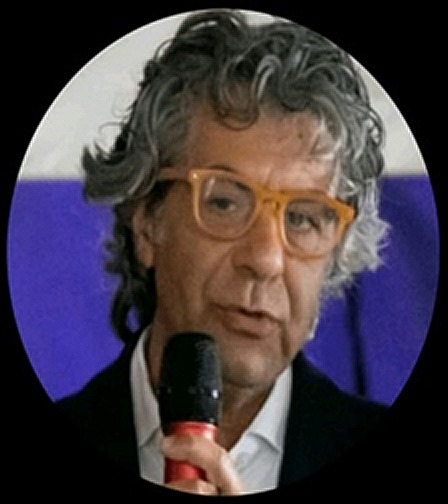
Enrico Sgariboldi
Copyright notice

© 2025 Enrico Sgariboldi (Author) – Text registered on Lutinx blockchain to protect against unauthorized reproduction. websgari@gmail.com


